Analogue Design Skills
In Analogue Design Skills first year students learn foundational analogue techniques while developing their creative process. They learn how to be comfortable at experimenting, drafting, projecting, making mistakes and finding solutions. Students explore observational drawing, collage, painting, printmaking, bookbinding, and pop-ups to design a travelogue about a fictional world that have characteristics and dynamics created by themselves.

Ouyang Wenfei, Environmental Design 2, Analogue Design Skills, ICI, Xiamen University, Fall 2022.

Peng Yunling, Visual Communication Design 2, Analogue Design Skills, ICI, Xiamen University, Fall 2022.

Zheng Yuting, Digital Media Art 4, Analogue Design Skills, ICI, Xiamen University, Fall 2022.

Gas Yiyang, Digital Media Art 1, Analogue Design Skills, ICI, Xiamen University, Fall 2022.
Digital Design Skills
In Digital Design Skills first year students learn foundational digital techniques while developing their creative process. They learn how to be comfortable at experimenting, drafting, projecting, making mistakes and finding solutions. They get familiar to software such as Photoshop, Illustrator, InDesign, and Premiere to create digital artifacts: posters, vectorial illustrations, digital drawings, brochures, logotypes, gifts and stop motion animations. Students learn how to combine analogue and digital processes by creating their digital artefacts based on the analogue work that they produced in Analogue Design Skills.

Zhu Xingyun, Visual Communication Design 3, Digital Design Skills, ICI, Xiamen University, Spring, 2023.

Cao Xinran, Digital Media Art 1, Digital Design Skills, ICI, Xiamen University, Spring, 2023.

Qiongyn Du, Environmental Design 1, Digital Design Skills, ICI, Xiamen University, Spring, 2023.

He Chenyue, Environmental Design 1, Digital Design Skills, ICI, Xiamen University, Spring, 2023.

Wang Chuchun, Digital Media Art 3, Digital Design Skills, ICI, Xiamen University, Spring, 2023.

Zhao Yingmiao, Digital Media Art 4, Digital Design Skills, ICI, Xiamen University, Spring, 2023.
Fields & Frames
In Fields & Frames, Year 3 Digital Media Arts students develop a self-directed creative project based on a topic of their choice, building on skills acquired throughout the program or explored independently.
By this stage, students have a solid foundation in photography, video, sound, installation, storytelling, research, and critical thinking, developed through guided briefs in Years 1 and 2. Year 3 marks a transition toward greater independence, as students move from responding to briefs to initiating their own projects, while integrating new skills such as game design, interactive media, VR, and 3D.
The unit is supported by lectures, workshops, and one-to-one tutorials, which help students refine their ideas and engage with contemporary debates in art and design. Tutorials are central, fostering a collaborative dialogue in which tutors guide, question, and support students in clarifying their intentions.
Students are encouraged to critically explore personal and societal themes, not to produce quick solutions but to engage meaningfully with complex questions. The outcome is work that is original, thoughtful, and critically engaged with contemporary issues.
HU Yueyi
Fermentation Musical
ICI, Xiamen University, Fall 2024
HU Yueyi created an interactive installation born of an interest in the process of fermentation, as enacted through the brewing of various beverages. For this work, he brewed multiple bottles of honey wine, using sensors to detect the gas produced during the fermentation process and convert it into unique sounds and visuals. The work drew exciting links between nature, science, art, and technology - presenting the ancient technique of fermentation – which continues to play an important culinary role in our lives today - in a new and dynamic way. Yueyi invited his audience to taste the honey wine, turning a visual installation into a participatory event.
WANG Zinuo
A Cactus’s Gaze
ICI, Xiamen University, Fall 2024
WANG Zinuo created an interactive installation and animation that critically explores the relationship between humans and nature. She transforms a sense of Anthropocentrism, creating her own world in which humans are planted in soil as ornaments, plants walk on the road, and cacti have voices that can express pain. Inspired by a visit to Xiamen’s Botanical Gardens, where she observed graffiti adorning the surfaces of many cacti, her work presents a humorous but important comment on the suffering of nature at the hands of humans. As shown in the video documentation, a real-life cactus invites the audiences to touch it, with the human touch activating a “scream” from the cactus.

JING Xinyi
ThisIsNotAGame.exe
ICI, Xiamen University, Fall 2024
JING Xinyi’s surreal and psychedelic game environment takes the user through a version of her own mental space. She has created a visually rich landscape with five distinct scenes: Dog Room, Meat Mountain, Uterus Pipe, Dog Maze, and Bottom of the Well. Xinyi created music and a narration that deepens the dreamlike experience, leading the user on a bizarre and humorous journey through the unknown. In Xinyi’s words, “the concept of the game is simple and not simple, because recognizing yourself is difficult”. She has created a mysterious world that invites the user to explore their own imagination.

Zhang Yueyue
The Talking Sea
ICI, Xiamen University, Spring 2025
The Talking Sea tells the story of Hai, a young girl who becomes withdrawn after the death of her mother. She lives with her father, who struggles to make a living in a declining fishing port. While he fights to keep their small business afloat, Hai is mocked by her peers for her quietness and isolation. One morning, while gathering seafood, she chases a small fish into the deep sea and, in a dream, unexpectedly reunites with her mother. In this fantastical underwater world, her mother offers comfort and imagination, giving Hai the strength to confront her grief and grow.
Hai’s silence and transformation reflect human need for emotional connection in the aftermath of loss. Her journey is one of self-discovery and healing, made possible through dreams and inner resilience. Inspired by firsthand observations of Guangdong’s coastal communities, the setting—with its rusting boats, salt-laden air, and bustling markets—brings a textured and authentic atmosphere to this introspective tale.

Qingyi Zhang
Wandering Gland Surgery
ICI, Xiamen University, Spring 2025
Wandering Gland Surgery transforms the body into an interactive stage to explore the historical intersections of medicine, identity, and storytelling. The concept of “wandering glands,” though fictional, echoes a legacy of speculative medical practices—such as early hysteria treatments, phrenology, and lobotomy—that reveal how the human body has often been interpreted through the shifting lenses of science and authority.
Scientific thought in the mid-20th century proposed that memory and personality reside in the frontal lobe, a belief that contributed to the use of procedures such as lobotomies. If the frontal lobe is akin to a memory card, then the body may be seen not as a passive container, but as a vivid theater—each organ bearing emotional memory and personal history. What if we could enter that space, listen to the echoes of lived experience, and trace the silent narratives inscribed in the flesh?
Wandering Gland Surgery stages a poetic and interactive journey inspired by the life of Hollywood actress Frances Farmer. Visitors become both observers and participants in a surreal surgical drama that navigates impressions of emotional memory, social expectation, and medical interpretation. Frances becomes a figure through which to explore how certain individuals have historically been misunderstood or pathologized.

Zhitong Ye
Record of Northeast Chinese Mages
ICI, Xiamen University, Spring 2025
Record of Northeast Chinese Mages is a first-person narrative game that blends PVE combat with a rich, immersive storyline. The game features three combat scenes and multiple cinematic cutscenes (CG content). Players assume the role of Yang Fangcai, the protagonist who wields a poplar branch—once used in his daughter’s tragic suicide—as a magical staff. In this surreal and disorienting version of reality, he battles as a “mage” within a society shaped by violence, repression, and inherited trauma.
The game explores the protagonist’s confrontation with patriarchal and clan-based structures rooted in traditional Chinese society. At its heart, the project critically reflects on the collective unconscious shaped by such systems, highlighting the oppression and exploitation experienced by rural women under lingering feudal ideologies.
Designed to be completed in approximately 7–10 minutes, the game invites players to navigate a complex emotional and symbolic landscape that challenges the boundaries between memory, resistance, and systemic violence.

Final Major Project
In the Final Major Project unit, I work closely with students as they develop a self-directed project that reflects their personal interests and creative ambitions within the field of Digital Media Arts. Whether they are creating animations, video games, interactive installations, performance, or experimental videos, my role is to guide them through each stage of the process—from initial idea development to final execution.
I support students in shaping their concepts, refining their research, testing materials and tools, and strengthening their critical thinking and reflective writing. Throughout the unit, I encourage them to take creative risks and to explore how their work connects to broader conversations in digital culture and contemporary art. My aim is to help them produce a cohesive, well-resolved body of work that not only showcases their skills, but also demonstrates their ability to think critically and communicate ideas through digital media.
Shi Shuoyang
Neon Dawn: Uprising
ICI, Xiamen University, Spring 2025
“Neon Dawn: Uprising” explores the reconstruction of social justice narratives within superhero cinema from an Asian perspective. Through the design of a stream-of-consciousness-style trailer, the work challenges the gender hegemony and cultural dominance traditionally associated with Western superhero films.
The project centers on a fictional technological conspiracy known as the “Equal Future Plan” and introduces five civilian heroes: the technology critic Chu Xi, the lower-class fighter Hong Xu, the elite awakener Rong Cheng, and the transcendent observer siblings Jiang Ze and Xiang E. Each character engages in resistance through diverse strategies, including hacking and physical confrontation, opposing the illusion of equality imposed by systems of technological control.
The characters’ costumes draw from Asian cultural practices such as kendo and Tai Chi, deliberately rejecting the gendered symbolism typical of conventional superhero design. Through fragmented editing and a visually contrasting aesthetic, the work constructs a narrative progression from individual awakening to collective resistance, ultimately seeking to reframe the concept of social justice in superhero storytelling through an Asian cultural lens.

Shujing Gong
Remainders of Remembering
ICI, Xiamen University, Spring 2025
“Remainders of Remembering” investigates the complex relationship between collective memory and digital technology, with a particular focus on how memory is preserved and reconstructed in an era increasingly shaped by algorithms and digital platforms.
The project emerges from a critical concern regarding the impact of digitalization on collective recollection, where memory becomes fragmented and continuously reshaped by the structures and logic of digital systems. In this context, memory is externalized and mediated through algorithms that influence what is remembered, how it is accessed, and which narratives are amplified or suppressed.
At its core, the work engages with the tension between physical memory, grounded in material experience, and digital memory, which exists as a fluid and often ephemeral construct, raising questions about authorship, control, and the reliability of remembrance in contemporary digital culture.

Yuyao Peng
The Utopia of Technology and Careers
ICI, Xiamen University, Spring 2025
“The Utopia of Technology and Careers” is a project shaped by reflections on childhood career aspirations, the constraints of reality, and an interest in the potential of technological development to expand, rather than replace, human possibilities.
Drawing from personal experiences, the work recalls a range of imagined future professions—from archaeologist to teacher and dentist—common to many during formative years. Over time, however, these aspirations are often reshaped or limited by individual abilities and external conditions, leading to a narrowing of perceived opportunities.
The project functions both as a commemoration of these early dreams and as a speculative exploration of how future technologies—particularly artificial intelligence and robotics—might lower barriers to entry in traditionally high-threshold professions. In doing so, it proposes a vision of technology as an enabling force capable of broadening access to diverse career paths rather than restricting them.
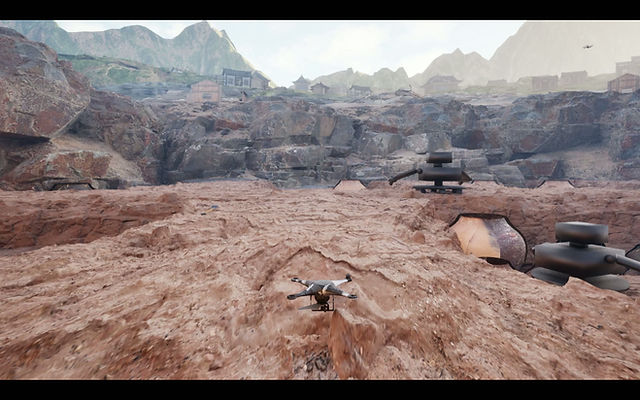
Wu Qiyi
Microbial Symbiosis
ICI, Xiamen University, Spring 2025
“Microbial Symbiosis” originates from the artist’s anxious cognitive experience of germs, particularly in the aftermath of the global pandemic, when societal awareness of hygiene and viral protection increased significantly. Practices such as mask-wearing, frequent handwashing, and the use of disinfectants have become embedded in daily life, contributing to the construction of a perceived “sense of security.”
However, this heightened awareness has also led to the subconscious framing of germs as purely negative entities. The work reflects on the resulting psychological tension between notions of cleanliness and contamination, examining how fear and protection coexist and shape individual perception.
Through this exploration, the project questions dominant narratives surrounding microbes, opening space to reconsider their role beyond purely harmful agents and to reflect on the complex relationship between the human body, environment, and invisible life forms.
